LIVE BUSINESS PROJECT / OTTAWA
TUTA
Before the restaurant came the evidence.
What started as a business plan for bank financing became a staged launch system designed to reduce uncertainty before the permanent restaurant opens.
Business planningBank financing supportMarket researchMVPEcommerceAutomationCustomer acquisition
01 / THE ORIGINAL BRIEF
Build a bank-ready case for a restaurant that did not yet have a permanent location.
The original assignment was to prepare a lender-facing business plan and support financing conversations for a Georgian family restaurant in Ottawa.
The planning work quickly exposed a larger question: how much of the forecast could be replaced with real operating evidence before capital was committed to a full physical launch?
02 / THE STRATEGIC SHIFT
The launch sequence changed.
Instead of asking the bank to finance a concept and validate demand later, the project moved part of the validation forward. The goal was simple: arrive at financing and the physical launch with fewer assumptions.
Initial sequence
- 01Business plan
- 02Financing
- 03Location
- 04Restaurant launch
- 05Customers
- 06Data
Rebuilt sequence
- 01Business plan
- 02MVP
- 03Real orders
- 04Data
- 05Model refinement
- 06Financing
- 07Physical launch
- 08Scale
03 / BANK BUSINESS PLAN
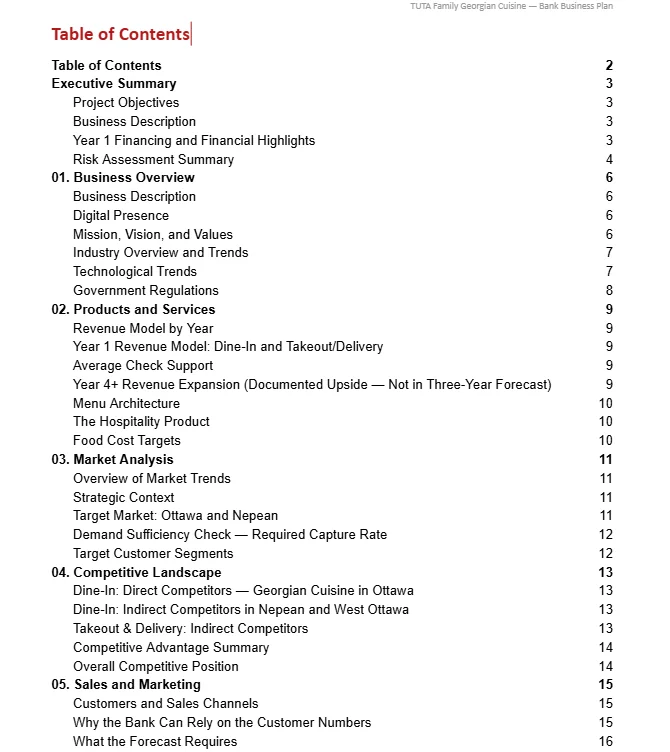
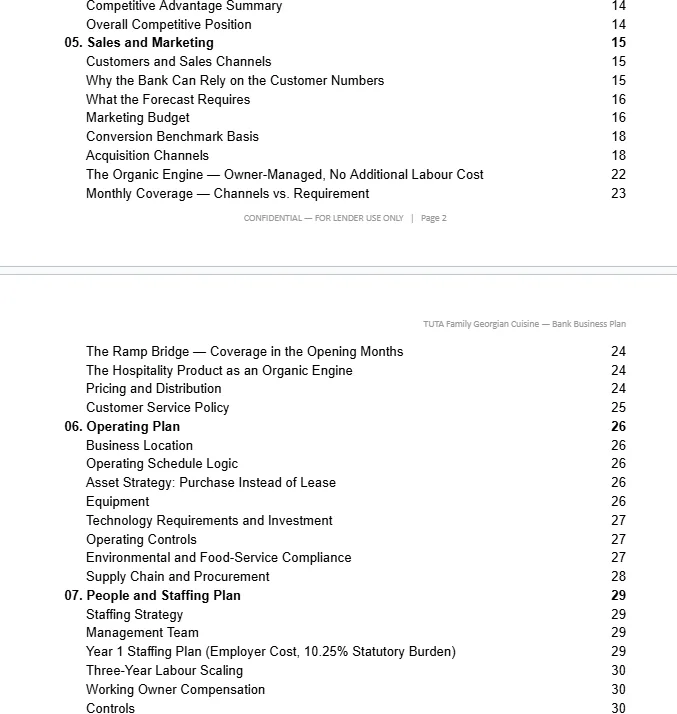
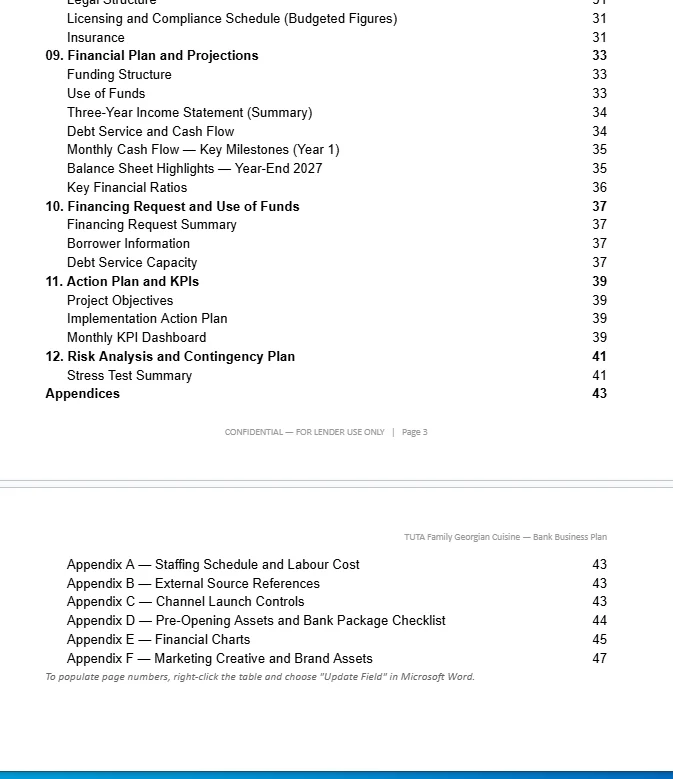
A lender-facing document became an operating map.
The plan joined market demand, competition, menu economics, staffing, operating controls, funding structure, risk, sales channels and launch milestones in one model. It was built for financing review, but also used to decide what needed proof before opening.
Market feasibilityCompetitive landscapeSales and marketingOperating planFinancial modelFinancing requestRisk and contingencyImplementation KPIs
CONFIDENTIALLENDER PACKAGE
04 / MVP BEFORE FULL LAUNCH
The business started selling before the dining room existed.
TUTA launched a direct online ordering model for Ottawa. Customers can browse the menu, select delivery or pickup, choose a date and time, pay securely through Square, and generate an operational order that enters the fulfilment workflow.
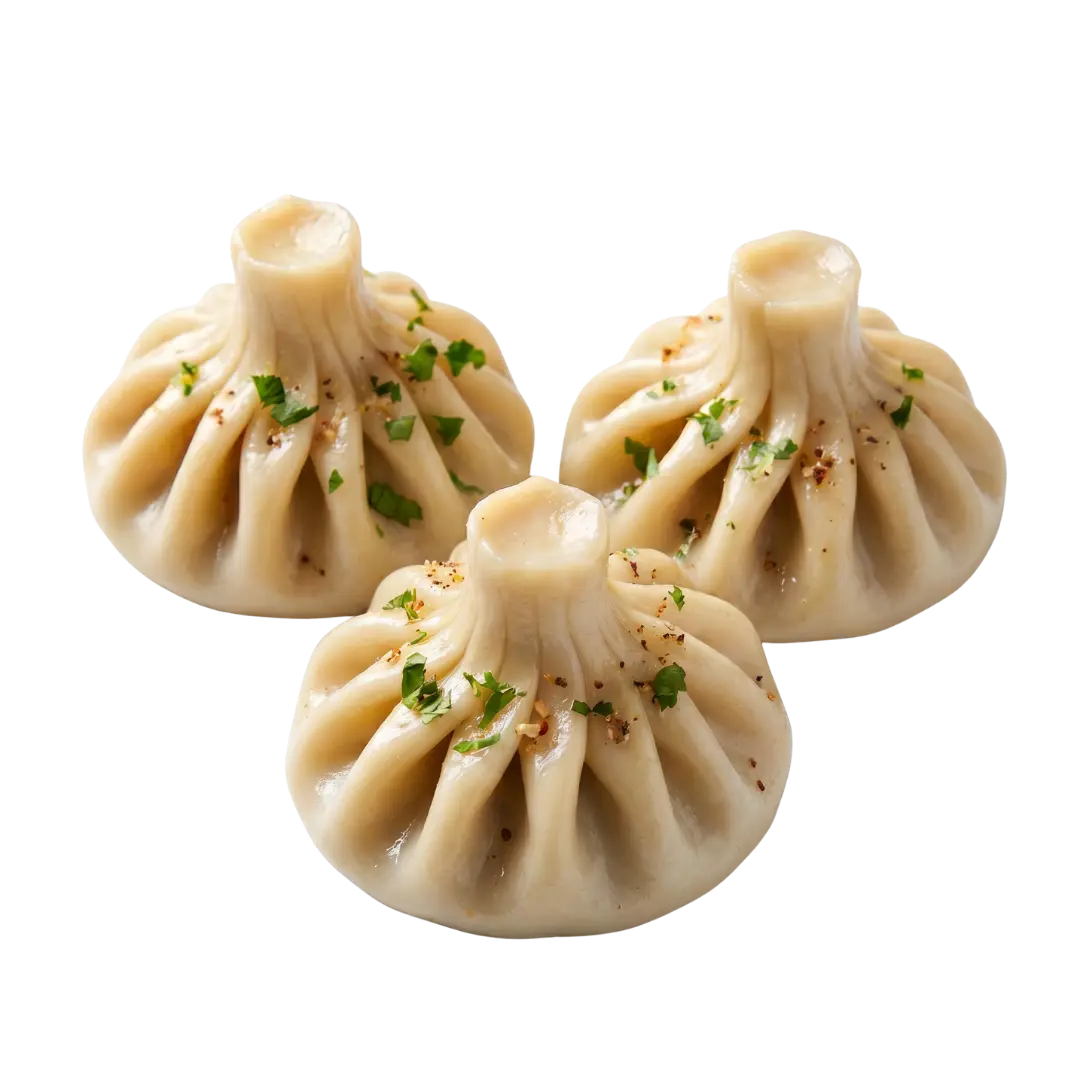
ONLINE RESTAURANTOrder. Schedule. Pay.tuta-ottawa.com ↗
05 / REAL TRANSACTIONS
The forecast began producing evidence.
Paid orders created a real feedback loop around product choice, order value, fulfilment, geography, customer questions and repeat demand. The screenshots below are live operational records with customer data redacted.
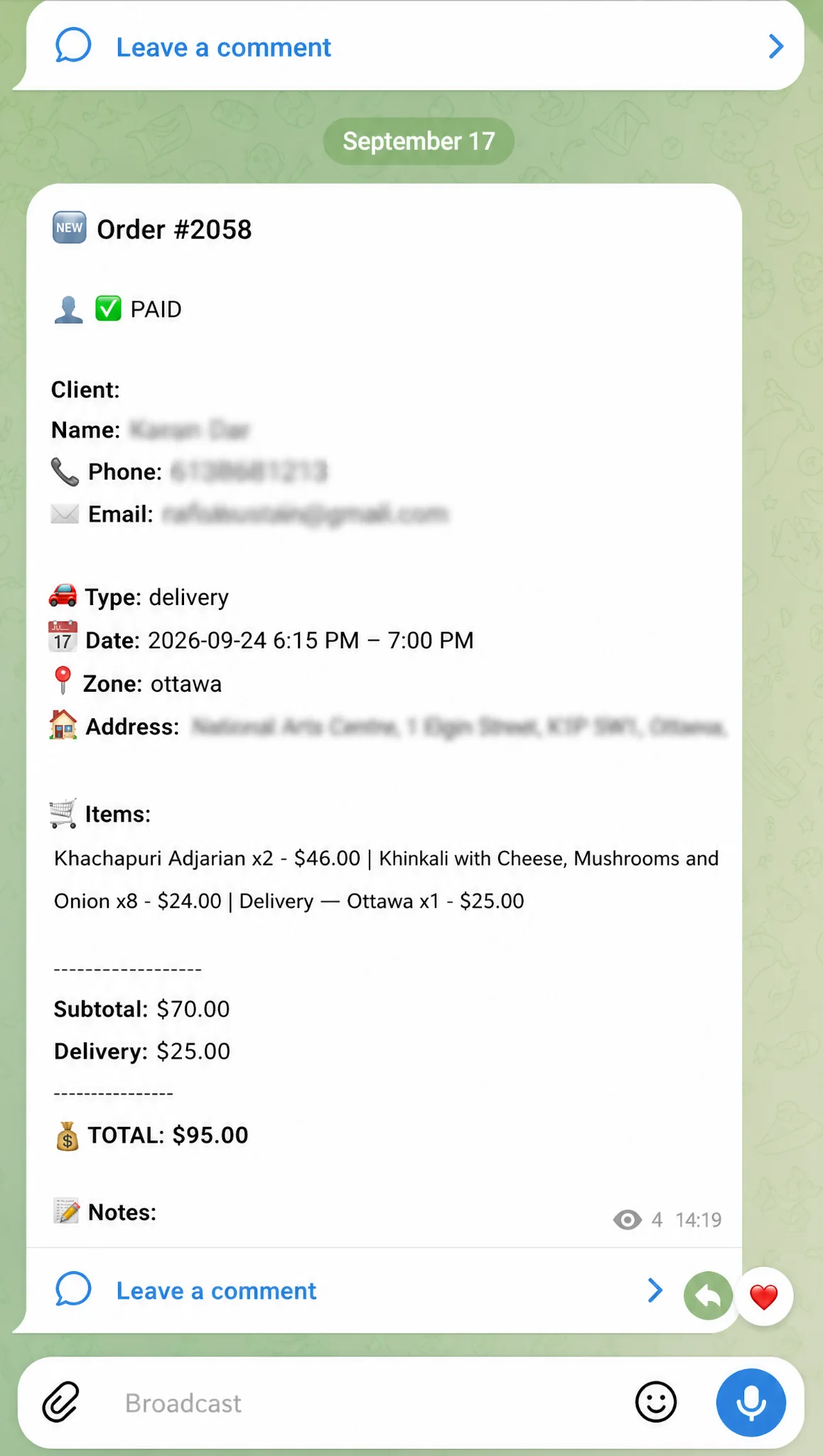
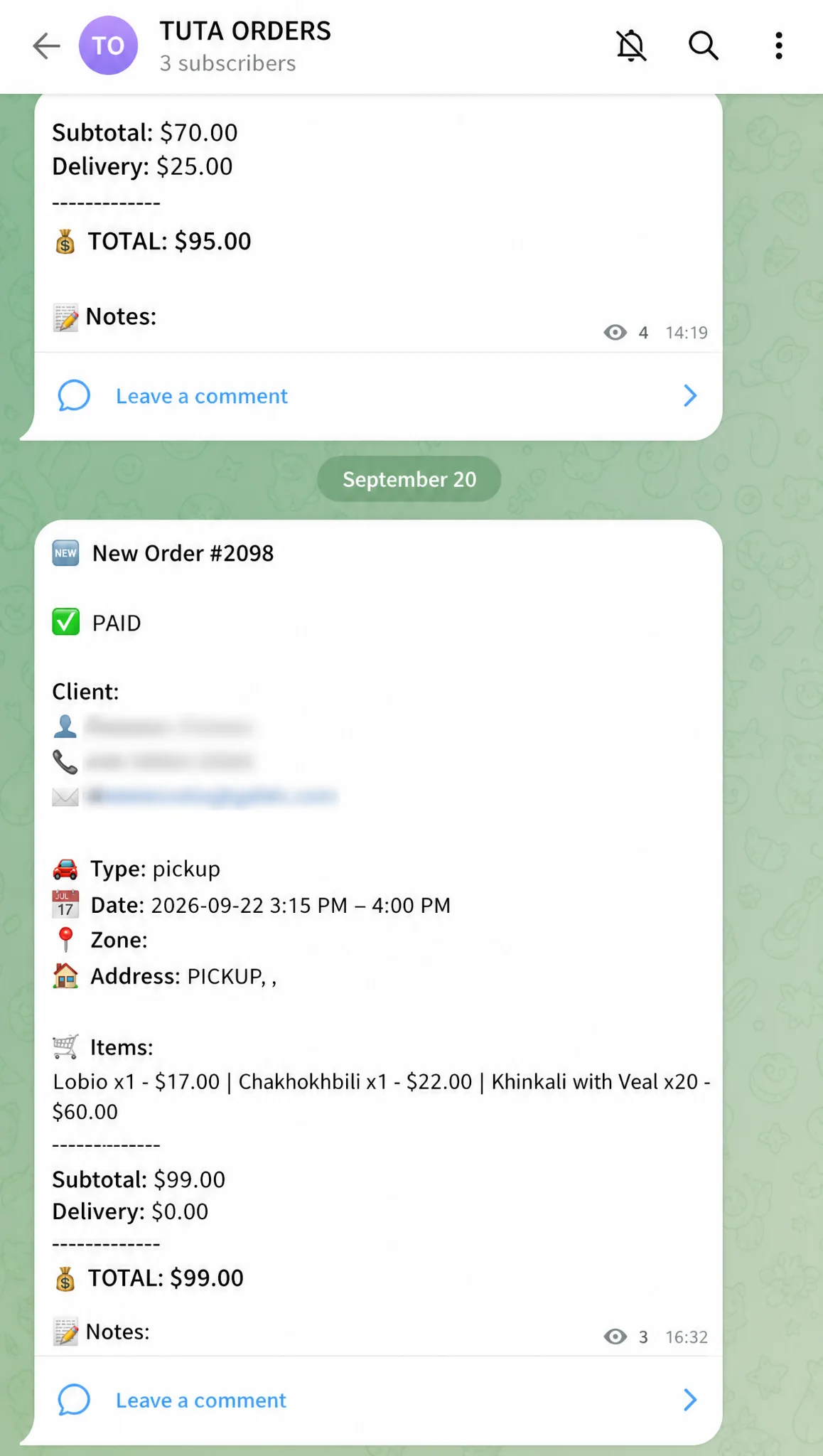
Paid orderReal basketReal fulfilment dateOperational notification
06 / AUTOMATION
One paid order becomes an operational workflow.
The order flow connects checkout to a custom webhook and Make scenario. Transaction data is logged and routed into notifications and operational handoff, so payment is not a dead end. It becomes structured business data.
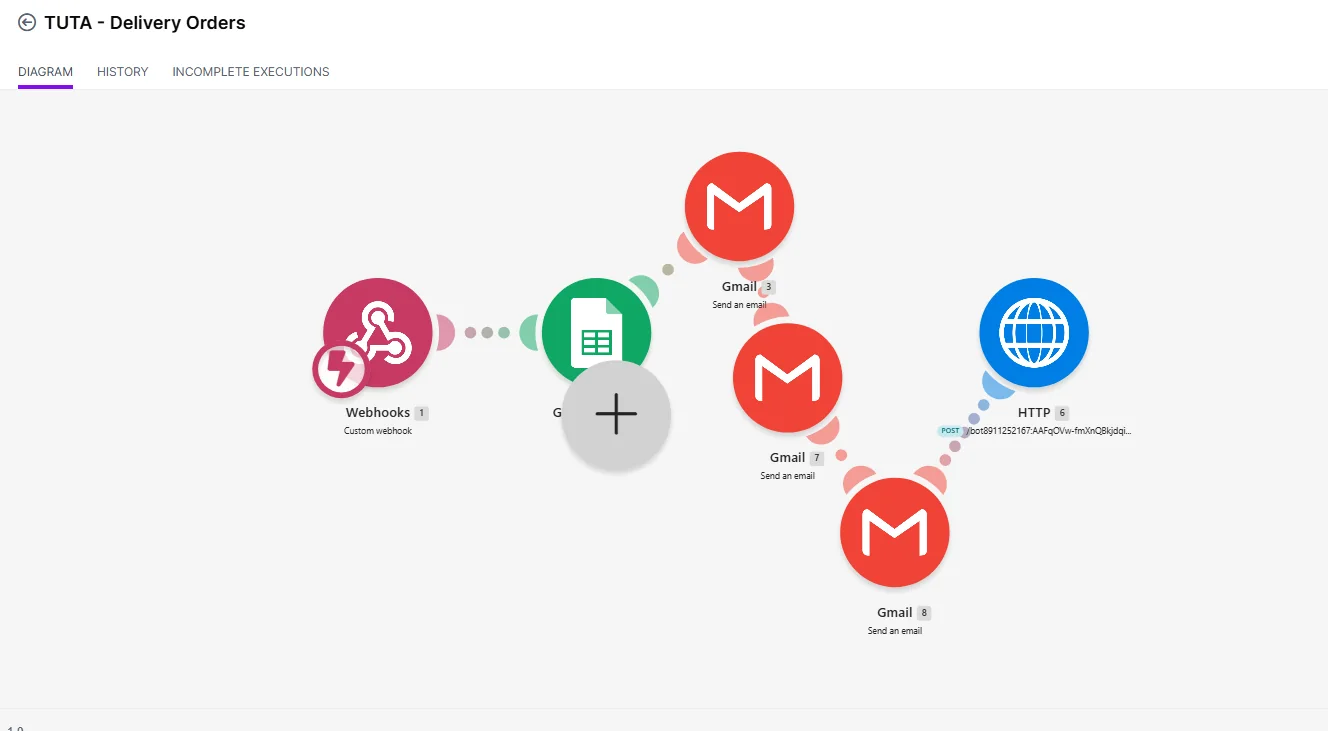
01Website
02Payment
03Webhook
04Make
05Google Sheets
06Gmail
07HTTP
08Telegram
07 / MARKET-FACING ASSETS
The MVP also created the first customer acquisition layer.
Website, menu, product storytelling and short video content gave the business something concrete to market while the permanent restaurant model was still being refined.
01MAIN WEBSITE FILM
08 / THE EVIDENCE LOOP
Every transaction improves the next decision.
The value of the MVP is not only early revenue. It converts assumptions into observations that can update the financial model, capacity plan, menu, acquisition strategy and eventual physical launch.
01Research
02Model
03Test
04Sell
05Measure
06Learn
07Update
08Scale
MY ROLE
Strategy, finance, market validation and execution were treated as one system.
The work crossed the boundaries between a traditional business plan, marketing, product design and operations because the risk sat between those functions, not inside only one of them.
WHAT CHANGED
The project moved from a forecast-only model to a business that can collect evidence before scaling.
The permanent restaurant remains the destination. The path to it is now staged, measurable and easier to update as real data arrives.
Lower uncertainty
Demand and operations can be observed before the largest capital commitment.
Stronger financing case
Financing discussions can include operating evidence, not just projections.
Better launch decisions
Menu, pricing, capacity and marketing can evolve from actual behaviour.

TUTA
The goal was not simply to open faster.
It was to reach opening with fewer assumptions and more evidence.